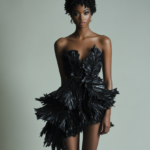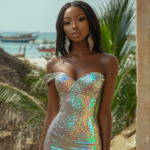
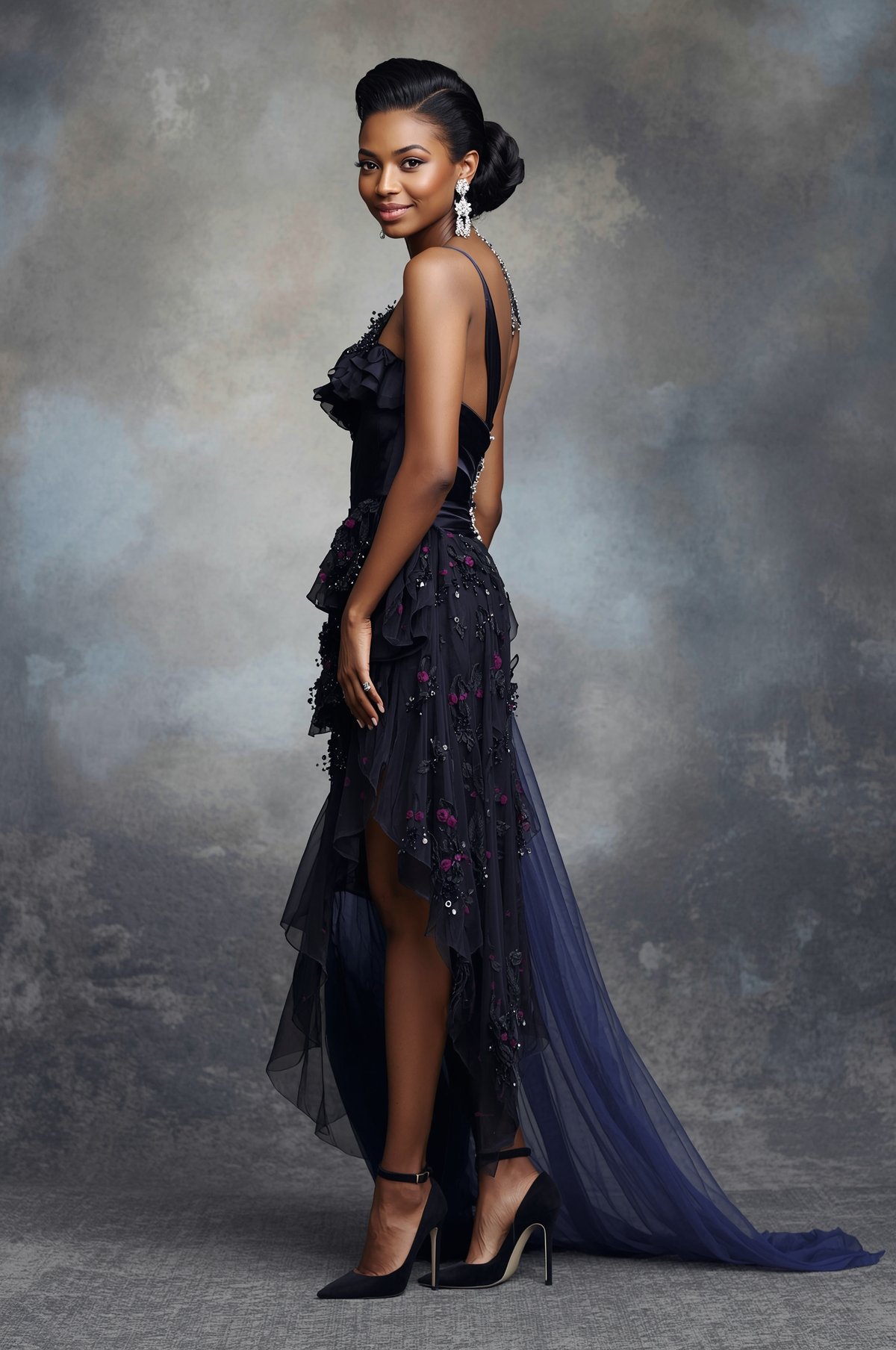
Here’s the thing nobody really explains clearly — “formal gala” is not one single dress code.
It’s a spectrum.
And where your event falls on that spectrum completely changes what you should be wearing.
A black-tie gala typically calls for a full-length evening gown, though a sophisticated midi can sometimes work depending on the venue and host.
A white-tie gala — the most formal of them all — is floor-length, always, no exceptions.
When I got my first real gala invite, I didn’t check which dress code applied.
I just assumed they were all the same.
They are not.
So my first piece of advice is this: read your invitation carefully, then Google the venue and the hosting organization.
Their past event photos will tell you everything.
If the women in those photos are in sweeping, structured ball gowns with gloves, you’re looking at a very traditional, very elevated event.
If it’s more creative cocktail-length with statement jewelry, there’s a little more breathing room.
Knowing your event level before you step foot in a store saves you from buying the wrong gown entirely.
That alone is worth the fifteen minutes of research.
The Length Rule and Why It Matters More Than You Think

I love a good midi moment.
But a formal gala is usually not the place for one, unless the dress code specifically allows it.
Floor-length gowns are the standard for a reason — they create a silhouette that feels intentional, ceremonial, and deeply elegant.
There is something about the way a full-length gown moves that a shorter dress simply cannot replicate.
It changes your posture.
It changes how you enter a room.
When I wore my first proper floor-length gown to a charity gala, I remember thinking — oh, THIS is what the fuss is about.
The hem just barely grazes the floor, and that sweep of fabric behind you as you walk is honestly one of the most quietly powerful feelings in fashion.
If you’re petite like me, don’t let the length intimidate you.
A gown that’s properly hemmed and tailored to your height is everything.
I can’t stress tailoring enough — it is the single most transformative thing you can do to any gown at any price point.
A $200 gown that fits your body perfectly will always outshine a $2,000 gown that doesn’t.
Always, always get it hemmed.
Choosing a Silhouette That Actually Flatters Your Body (Not Just the Hanger)

Shopping for a gala gown in-store is a completely different experience than online, and I always recommend trying things on in person if you can.
Because silhouettes are deeply personal, and what reads as “stunning” on a model can feel completely off on your actual body — and that’s okay.
My personal favorites for gala dressing are column gowns, A-line cuts, and fit-and-flare styles.
Column gowns are sleek and minimalist — they photograph beautifully and feel so chic in person.
A-line gowns are forgiving, flattering, and genuinely work on almost every body type.
Fit-and-flare styles give you that classic hourglass drama that reads incredibly well in a grand ballroom setting.
What I’d personally avoid for a very formal gala is anything too bodycon or too trendy.
Galas have a timeless quality to them, and your gown should feel like it could have been worn ten years ago and could be worn ten years from now.
Think Grace Kelly, not Instagram trend.
If I had to give one universal piece of advice, it would be this: choose the silhouette that makes you feel the most like yourself — just elevated.
Comfort and confidence are always the most flattering accessories.
Fabric and Texture — Because This Part Changes Everything

The fabric of your gown is doing a lot of quiet, invisible work that most people don’t consciously notice — but they feel.
Satin catches light in a way that feels cinematic.
Velvet has this rich, almost jewel-like depth that photographs beautifully under warm gala lighting.
Chiffon layers create softness and movement that makes a gown feel almost ethereal as you walk.
Crepe is structured, matte, and incredibly elegant without being fussy.
When I wore a deep navy Satin Column Gown to a formal dinner gala, I remember catching it in the candlelight and thinking — yes, this is exactly the feeling I was chasing.
For winter galas, I’m personally obsessed with velvet — it feels luxurious and warm and deeply intentional.
For warmer months or outdoor gala settings, chiffon and silk are your best friends.
One thing I always tell my readers: avoid anything that wrinkles badly in transit.
You’re sitting, you’re standing, you’re taking photos, you’re dancing possibly for hours.
Your fabric needs to handle that gracefully.
Crepe and structured satin hold up beautifully.
Thin jersey and some silks can look a bit tired by the end of the night, which — honestly — nobody wants.
Neckline Etiquette and What’s Actually Appropriate

Here’s where I see the most confusion, and I get it — necklines feel very personal.
But there are some soft, unspoken rules around gala necklines that are worth knowing.
A sweetheart neckline is timeless and appropriate for almost every formal gala setting.
A classic V-neck — not too plunging — is elegant, universally flattering, and always safe.
A high-neck or mock-neck gown is having a major moment and reads as incredibly sophisticated and editorial at formal events.
Off-shoulder necklines are romantic and beautiful, though I’d suggest double-checking your fit carefully — you want to feel secure, not be adjusting all night.
Where I’d personally pump the brakes is an extremely deep plunge at a very traditional, conservative gala.
Read the room.
A charity gala at a grand historic venue has a different energy than a fashion industry gala, and your neckline should reflect that awareness.
My tip: if you’re unsure, go for the neckline that you genuinely feel most beautiful and confident in — just make sure the fit is perfect.
Because confidence in your posture will always speak louder than the cut of your neckline.
Color Choices That Read “Gala-Ready” — My Personal Color Playbook

Color is where the fun really begins, and I have strong feelings about this.
Classic black is always appropriate, always chic, always a safe choice — but it doesn’t have to be your only option.
Deep jewel tones — emerald, sapphire, burgundy, amethyst — photograph stunningly under gala lighting and feel appropriately formal without being predictable.
Blush and champagne tones read as ultra-feminine and are perennial gala favorites for a reason.
Ivory is gorgeous but worth avoiding if the event honors a bride or has a wedding-adjacent feel.
Bold colors like cobalt, cherry red, or burnt orange can be absolutely show-stopping when worn with confidence.
What I personally love to do is consider the venue first.
If the gala is in a grand gold-and-crystal ballroom, I’d lean into deep, rich colors that hold their own in that opulence.
If it’s a more modern, minimalist venue, I might go for something clean and architectural — a stark white gown or a beautifully structured neutral.
The one thing I’d steer away from is anything overly casual in color story — faded pastels, busy prints, or very light florals can read as too relaxed for a formal setting.
You want your color to feel intentional and elevated.
And honestly, wearing a color that lights up your complexion is always, always worth it.
The Jewelry and Accessories Equation — Less Is More, But Make It Count

Gala jewelry is one of my favorite topics because it’s where you can really express personality within a formal framework.
But there is a balance here, and it matters.
My personal rule: let your gown lead, and let your jewelry support it.
If your gown is heavily embellished — beaded, sequined, or fully detailed — keep your jewelry minimal and refined.
A simple diamond or crystal drop earring, a delicate bracelet, done.
If your gown is sleek and minimal — a clean satin column, a simple crepe A-line — this is your moment to bring in a statement piece.
A bold chandelier earring, an architectural cuff, a striking necklace.
One statement piece, worn with intention, is always more powerful than layering multiple competing pieces.
I’m a huge fan of classic pearl jewelry for galas — it never reads as outdated, it photographs beautifully, and it has this timeless quality that feels genuinely appropriate for formal settings.
For bags, keep it small and refined.
A satin clutch, a metallic minaudière, a beaded evening bag.
You’re not running errands — you need your phone, a lip touch-up, and a card.
A small structured clutch handles all of that beautifully.
Shoes — The Overlooked Detail That Pulls Everything Together

Shoes matter more than people give them credit for, especially under a formal gown.
Because even though your hem might skim the floor and nobody sees much of your shoe, you feel it with every single step you take.
Classic pointed-toe heels in a metallic or neutral finish are the quintessential gala shoe for a reason — they elongate the leg, they feel formal, and they photograph stunningly when your gown is lifted slightly for a photo.
Strappy heeled sandals are equally appropriate and honestly a little more comfortable for a long evening.
If heels genuinely aren’t your thing or aren’t comfortable for you, a beautiful embellished flat or a low kitten heel is a completely elegant and totally valid option.
Please don’t sacrifice your entire evening on shoes that hurt so much you can’t enjoy yourself.
I’ve done that.
Never again.
My favorite tip for gala shoes: buy them early, wear them around your home for a few hours before the event, and apply cushioning insoles or heel pads.
A little preparation goes a very long way when you’re on your feet in a grand ballroom for four hours.
Also — match the formality of your shoe to your gown.
A structured, ornate ballgown deserves a refined, embellished heel.
A sleek column gown can carry a simple satin mule beautifully.
Hair for a Formal Gala — Thinking About the Full Picture

Your hair at a gala is part of your full look, and it’s worth planning with the same intentionality as your gown.
The classic updo — a chignon, a French twist, a sleek low bun — is the most traditionally appropriate choice for a very formal evening because it creates that clean, elongated line that formal dressing is all about.
It also shows off your neckline and jewelry in a way that loose hair simply can’t.
That said, I don’t think loose hair is ever truly off-limits at a gala.
A beautifully styled half-up look, or soft, structured waves that feel polished rather than casual, can be absolutely stunning.
The key distinction is intentionality — your hair should look like you made a decision, not like you ran out of time.
When I prepped for my first formal gala, I did a hair trial three days before, and I cannot recommend this enough.
Knowing exactly how your hair will look and how long it takes to achieve takes so much pressure off the day itself.
One personal tip: think about how your hair will look in photos.
Gala events are photographed often.
Styles that stay structured and polished throughout the evening photograph far better than styles that soften or drop as the night goes on.
The Etiquette of Movement — How to Actually Wear a Formal Gown

This is the section nobody ever writes, and honestly, it’s the one I wish someone had given me before my first gala.
Moving in a formal gown is a learned skill.
Seriously.
A floor-length gown with a train requires you to think about your movement in a way that everyday dressing simply doesn’t.
When you sit, gather a small amount of fabric at the front of your gown gently before lowering yourself — this prevents pulling at the seams and keeps the fabric smooth.
When you stand from a chair, push up from your arms and let the gown fall naturally.
Don’t yank it or pull it.
When you climb stairs, use your non-dominant hand to gently lift the front hem just a few inches — enough to step comfortably without tripping.
Practice this at home the evening before.
Walk around your living room in your gown and heels for at least thirty minutes.
I’m serious about this.
It sounds excessive, and it is genuinely so worth it.
You want to feel comfortable in the gown before you wear it in public, not discover its quirks in a crowded ballroom.
Knowing your gown’s personality — how it moves, where it requires adjustment — gives you real, palpable confidence.
What to Skip — My Personal Gala Fashion Don’t List

I always find it helpful to talk about what not to do just as much as what to do, so here’s my personal list of gala don’ts.
Skip anything that’s designed primarily for nightclub dressing — extremely short hems, very sheer fabric with minimal coverage, or anything that relies heavily on bodycon stretch.
These silhouettes aren’t inherently wrong — they just don’t read as formally appropriate for a gala context.
Skip heavy, overly casual footwear.
Platform sneakers, block-heeled mules, or strappy flat sandals that feel beachy rather than refined don’t complement a formal gown the way elevated shoes do.
Skip over-accessorizing.
I know it’s tempting to wear everything beautiful you own at once, but more often than not, it reads as chaotic rather than lavish.
One beautiful piece speaks louder than five competing ones.
Skip synthetic fabrics that don’t breathe or hold their shape well under movement.
You will be warm, you will be active, and you will be photographed.
Your fabric needs to be a team player.
And finally — skip anything that doesn’t genuinely make you feel like the most beautiful, confident version of yourself.
That feeling you get when something is right?
That’s the only checklist that actually matters.
Getting Ready on the Day — My Personal Pre-Gala Ritual

The morning of a gala is one of my favorite rituals, and I’ve refined mine over the years into something that feels really calm and intentional rather than chaotic.
Start earlier than you think you need to.
If you think you need two hours to get ready, give yourself three.
Something will need to be re-pressed, or your updo will need a second attempt, or you’ll realize you haven’t broken in your shoes yet.
Lay everything out the night before — gown, shoes, jewelry, bag, undergarments, all of it.
Seeing it all together gives you one final check to make sure everything works as a complete picture.
Do your skincare routine slowly and with intention.
A formal gala is one of those occasions where you want to feel genuinely pampered going in, not rushed.
I love doing a gentle face mask the evening before and making sure my skin is deeply hydrated, because formal makeup sits so much more beautifully on well-moisturized skin.
Steam your gown the morning of — never iron it directly, always steam.
And finally: give yourself ten quiet minutes before you leave the house.
Stand in front of your mirror.
Take in the full look.
Let yourself feel beautiful before anyone else sees you.
Because you showing up with that internal confidence?
That’s the most stunning thing you can wear.