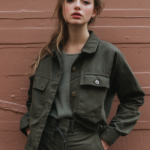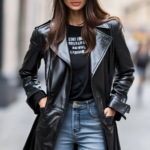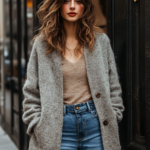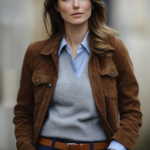
I used to be the girl who bought the coat.
Not sure what else in your closet works with it? The free closet stylist shows the colours and the outfits that pair with a piece, from a photo that never leaves your phone.
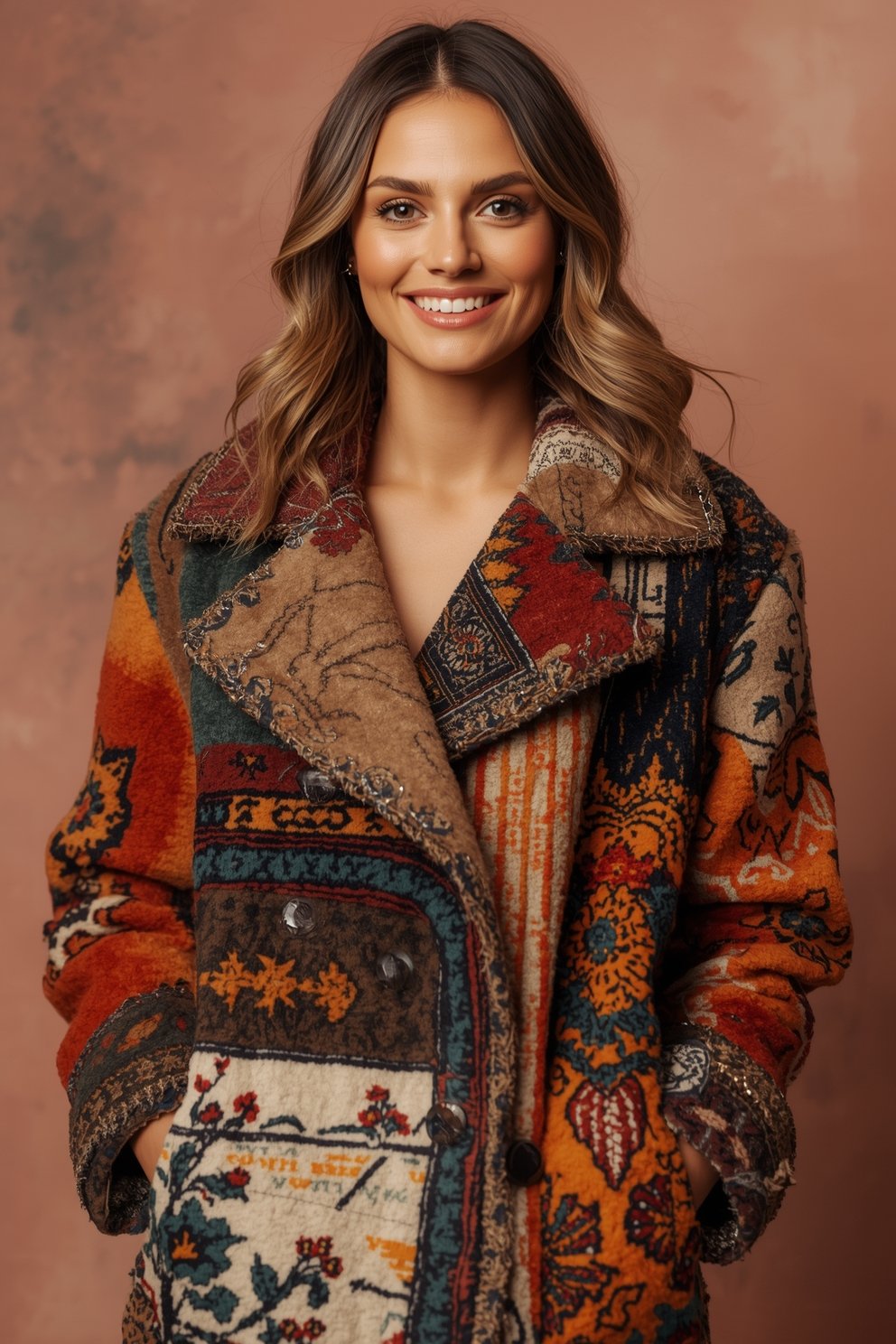
You know the one — dramatic collar, wild color, maybe a plaid so loud it practically announced itself walking into the room.
And then I’d hang it in the closet and reach past it every single morning for the safe, beige option.
Every.
Single.
Time.
It took me an embarrassingly long time to figure out that a statement coat doesn’t need a statement occasion.
It just needs the right approach.
And honestly?
Once I cracked the code, I stopped buying boring outerwear altogether.
Here’s everything I figured out — the styling tricks, the mindset shifts, and the little outfit formulas I use on the most regular, mundane, nothing-special Tuesday mornings.
The “Let the Coat Talk” Rule I Live By

The first thing I had to unlearn was the instinct to match energy.
I used to think a bold coat needed a bold outfit underneath.
Big mistake.
A loud coat paired with a loud outfit is just… a lot.
Not in a chic way.
More in a “I got dressed in the dark” way.
What actually works — and what I do almost every single time — is letting the coat be the entire focal point.
Everything underneath gets quieter.
Think black skinny jeans, a white tee, clean sneakers.
Simple.
Almost boring, on purpose.
When I wore my oversized emerald green wool coat to the grocery store last winter — with just a grey crewneck and straight-leg jeans underneath — three separate people stopped me to ask about it.
The coat did all the talking.
I didn’t have to do a thing.
If I could give you one rule to take away from my whole coat journey, it’d be this one.
Quiet the outfit, elevate the coat.
Why Everyday Wear Is Actually the Best Place for a Statement Coat

There’s this weird thing we do where we save our most beautiful pieces for “special occasions.”
And then the special occasions don’t come fast enough, and suddenly the coat still has its tags on in April.
I’m done with that.
Everyday wear is actually the perfect backdrop for a statement coat because everything else is so ordinary.
The coffee run.
The school drop-off.
The errand loop on a Saturday morning.
Those moments are exactly when a gorgeous coat hits differently.
It feels almost rebellious, you know?
Like wearing something beautiful just because you wanted to.
Not for a party.
Not for a photo.
Just for yourself, on a random Wednesday.
When I started doing this — treating my boldest pieces like everyday staples — something shifted.
I started feeling more like myself in the most mundane parts of the day.
And honestly?
That’s the whole point of fashion for me.
Not the runways.
Not the events.
The ordinary Tuesday morning where you catch your reflection and think — yeah, I look good.
The Outfit Formula I Use on Lazy Mornings

Some mornings I have zero brain space for outfit decisions.
And those are actually the mornings I’ve perfected the statement coat formula.
It goes like this:
Monochrome base + statement coat + one simple accessory.
That’s it.
A head-to-toe grey look — grey joggers, grey long-sleeve, grey beanie — topped with a caramel faux-fur coat?
Effortlessly styled.
A black-on-black-on-black base with a cobalt blue coat thrown on top?
Chef’s kiss.
The monochrome base acts like a blank canvas.
It makes the coat pop without any effort on your part.
The single accessory — a tote bag, a simple scarf, a clean white sneaker — keeps it grounded and real.
I love this formula because it takes the decision fatigue completely out of it.
Some days I pick the coat first, then build the muted base around it.
Other days I get dressed in whatever cozy monochrome situation feels right and grab whichever coat wants to come along.
Both ways work.
Both ways look intentional.
How to Style a Plaid Statement Coat Without Looking Like a Costume

Okay, plaid coats.
I am obsessed with them and also I totally understand why people are scared of them.
A really bold plaid — red and black, oversized check, bright tartan — can feel like a lot to commit to on a Tuesday.
Here’s my trick: treat the dominant color in the plaid like it doesn’t exist.
Pull only the secondary color.
So if your coat is a red and camel plaid, dress entirely in camel or cream underneath.
The coat suddenly looks cohesive instead of chaotic.
I did this with a black-and-white houndstooth coat I found at a vintage market — wore all-white everything underneath — and it looked so intentional.
Like I’d planned it for weeks.
I hadn’t.
I’d gotten dressed in ten minutes.
Another tip: keep your shoes and bag in a neutral that doesn’t compete.
Tan leather, black, white.
Nothing too shiny or statement-y on its own.
Let the plaid be the moment.
You just show up.
Wearing Bright Colors on Grey Days (And Why It Feels So Good)

There’s something almost medicinal about putting on a bright coat on a grey, rainy, nothing-day.
I’m not being dramatic.
A fuchsia coat on a cloudy Monday morning does something to your mood that a cup of coffee can’t quite match.
I have a cherry red wool coat that I reach for specifically on bad-weather days.
Not in spite of the gloom.
Because of it.
Pair a bright statement coat with dark, simple pieces underneath — black or navy — and the coat glows even harder against the moody backdrop.
It’s sort of a visual contrast trick.
The darker your base, the brighter the coat reads.
If you’re nervous about full-on bright color, start with a saturated neutral.
Caramel, rust, forest green.
These are technically “neutral” in the grand scheme, but they still give you that same lifted feeling without feeling like a neon sign.
And here’s the thing — people will notice.
Not in an uncomfortable way.
In a “wow, she looks amazing” way.
Wear the bright coat.
Do it.
My Favorite Texture Play: Faux Fur, Bouclé, and That Cozy Factor

I think texture is honestly the underrated secret weapon of statement coats.
Sometimes the statement isn’t even about color.
It’s about the way the coat feels when you brush past something.
The way the bouclé catches the light.
The way a faux-fur collar makes even a plain coat look like it belongs in a magazine.
My absolute favorite combo right now is a bouclé coat in oatmeal or cream worn over sleek, straight-leg trousers and a silk-ish blouse.
The contrast between the cozy, fluffy coat and the smooth fabric underneath is chef’s kiss.
Textural contrast does the same thing color contrast does — it creates interest without trying too hard.
If I had a small budget and could only invest in one statement coat, I’d go for something textured in a neutral shade.
Because it works harder.
It reads as bold without being overwhelming.
And it photographs beautifully, if that matters to you.
Which, honestly?
It matters to me.
Belting a Statement Coat: The Move That Changes Everything

This one tip changed how I wore coats forever.
A lot of statement coats come oversized.
Big shoulders, wide silhouette, dramatic drape.
And I love that look.
But on petite frames — or on days when you just want some shape — belting the coat is a total game-changer.
(Okay, I know “game-changer” is banned.
But BELTING.
IS.
EVERYTHING.)
I reach for a thin leather belt or a wide statement belt depending on the coat.
A sleek, thin belt gives a tailored, intentional vibe.
A chunky belt with an interesting buckle leans more editorial.
On my oversized camel coat, I use a cognac leather belt cinched at the natural waist.
It transforms the whole silhouette.
Suddenly it’s less “borrowed from boyfriend” and more “I designed this on purpose.”
You don’t even need a matching belt.
Contrast works just as well.
A black belt on a cream coat.
A brown belt on a plaid.
Try it once and you’ll never go back.
Sneakers With a Statement Coat: My Everyday Uniform

Fashion rulebook says coats like this need heels.
I disagree loudly.
Sneakers with a dramatic statement coat might be my single favorite outfit combination in the world.
There’s something about the mix of elevated and casual that just looks so effortlessly cool.
I wore a long, mustard yellow wool coat with white chunky sneakers to a brunch once.
People thought I’d styled it for hours.
I’d rolled out of bed, grabbed the coat, and left the house in twenty minutes.
The key is keeping the sneakers clean and simple.
White is the easiest option — it works with almost everything.
But a neutral tan suede sneaker or a clean black leather option works just as well.
Avoid overly sporty or bulky athletic sneakers unless the coat is very casual in nature.
You want easy, not sloppy.
The juxtaposition is the whole point.
The coat says dressed-up.
The sneakers say relaxed.
Together, they say effortlessly stylish.
Scarves, Bags, and the Art of Not Over-Accessorizing

When the coat is the statement, your accessories should step back.
Not disappear.
Just… whisper instead of shout.
My go-to bag with a statement coat is always something structured and simple.
A small leather tote.
A clean crossbody.
Nothing too embellished or trendy on its own.
For scarves — if the coat already has a dramatic collar or oversized lapels — I skip it.
The coat is doing enough.
But if the coat is more of a simple silhouette with a bold color or print, a thin silk scarf tucked loosely at the neck adds just the right polish.
Jewelry stays minimal.
Thin gold hoops.
A simple ring.
Maybe a delicate necklace if I’m wearing something with a lower neckline underneath.
The golden rule I follow:
If the coat is the loudest thing, everything else should be a supporting character.
Not a co-star.
Not a rival.
A quiet, confident supporting character that makes the lead shine.
How to Transition a Statement Coat from Day to Night

One of the things I love most about a really good statement coat is that it pulls double duty.
Same coat.
Different energy.
Daytime: white tee, straight jeans, sneakers, minimal bag.
Nighttime: silky slip dress or tailored trousers, low heels or ankle boots, a small evening bag.
The coat stays.
Everything underneath shifts.
I did this last winter with a deep burgundy statement coat.
Wore it with jeans and loafers to lunch, then threw it over a black satin midi dress for dinner that evening.
Two completely different vibes.
Same coat.
Zero extra effort.
The key to making this transition smooth is choosing coats with a somewhat elevated fabric or silhouette.
A beautiful wool, a structured cut, a dramatic length.
Those pieces naturally elevate whatever goes underneath.
A very casual puffer, for example, doesn’t make that same leap as easily.
But a structured statement coat?
Day to night in literally ten seconds.
The Vintage and Thrift Coat Secret I Swear By

Some of my most-complimented statement coats have come from thrift stores and vintage markets.
Not all of them.
But a solid half.
Vintage coats — particularly from the seventies and eighties — were made with incredible fabric quality and silhouettes that feel fresh again right now.
The oversized fits, the dramatic lapels, the rich jewel tones.
They were made for this moment.
When I thrift for coats, I look past the surface stuff.
I check the structure.
The shoulders.
The lining.
A coat with good bones can be cleaned, maybe lightly tailored, and worn for years.
I found a floor-length plum wool coat at a vintage store for almost nothing.
The lining needed a small repair.
The buttons needed replacing.
Cost me almost nothing to fix.
That coat now gets more compliments than almost anything I own.
My tip: don’t look for a “perfect” vintage coat.
Look for a coat with great structure and interesting fabric.
Everything else is fixable.