
Pick your two perfumes’ scent families and strengths, and how long you need them: which goes on first, whether the pair works, how many sprays, and how long each lasts on every guide’s own table, each line quoted from perfume houses’, beauty retailers’ and magazines’ pages.
Vanilla & sweet EDP + Floral EDT · A workday
Vanilla first, then floral: a classic pairVanilla is a base note, floral a heart note: 5 of the 7 guides that name an order put the heavier one on first. Your EDP: 5–10+ hours on the guides’ tables.
- First on
- Vanilla & sweet (EDP)
- Then
- Floral (EDT)
- Sprays
- 1–2 of each
- Lasts
- EDP 5–10+ hours
The pair: a classic pair
A classic pair: the guides name it
- “Vanilla + Floral: The sweetness of vanilla adds depth to delicate florals like rose, jasmine, or peony.” — Ulta Beauty
- “Vanilla + Floral (e.g., jasmine, rose) – A warm, sensual mix where vanilla adds creamy sweetness while florals bring elegance and femininity.” — So Avant Garde
- “For example, you might layer a vanilla-based scent with something floral like rose or jasmine.” — Blavity
- “Timeless pairings include the romantic union of rose and vanilla, or the vibrant contrast between zesty citrus and noble white florals.” — Marc-Antoine Barrois
The order: vanilla (EDP) first
Vanilla is a base note, floral a heart note
- “Key base notes include sandalwood, amber, musk, vanilla, and patchouli .” — Scento
- “Woods, musk, vanilla, and amber tend to anchor the scent, allowing it to linger on the skin for hours.” — So Avant Garde
- “Oriental (or Amber): These are spicy, sweet, and rich, including vanilla, cinnamon, and amber.” — Ulta Beauty
- “Popular middle notes include rose, jasmine, spices, and geranium .” — Scento
- “There are essentially three note layers to keep in mind: 1. A base (heavy & grounding), 2. A middle (soft & subtle), and 3. A top (bright & fresh).” — Anthropologie
Most guides: the heavier scent first, the lighter one over it
- “She explains that a general tip for layering is that whatever their form, heavier scents should always be sprayed or applied first.” — T3
- “Start with the heaviest fragrances – those with base notes like wood, amber, or musk – and finish with lighter options such as citrus or floral.” — Scento
- “Pro Tip: Always spray your heaviest scent (the one with the most base notes) first.” — Ajmal
- “Always apply heavier woody or amber bases first, then layer volatile floral or citrus top notes over pulse points.” — Marc-Antoine Barrois
- “Your base scent is crucial, as it sets the foundation for your layering.” — Blavity
Two guides start with the lighter one instead
- “When layering perfumes, start with the lightest scent first and build toward the heaviest.” — Ulta Beauty
- “Start with the lightest , most delicate scent first. Follow with the richer , deeper notes. Heavier scents should go last to anchor the composition and provide longevity.” — So Avant Garde
Step by step
Moisturise first, with an unscented lotion
- “Perfume lasts longer on oily skin so before applying it, moisturise using unscented body lotion.” — Beaut.ie
- “Hydrated skin holds onto fragrances much longer than dry skin so don’t forget to moisturise before spraying.” — T3
- “For a layer that lasts, apply an unscented moisturizer first to "trap" the fragrance molecules and create a smooth canvas.” — Ajmal
- “Using an unscented lotion as a base before applying your scents can further enhance their staying power.” — Scento
Spray your pulse points: wrists, neck, inner elbows, behind the ears or knees
- “It’s all in the application so stick to areas like your wrists, neck, ears, inside your elbows and even behind your knees.” — T3
- “This heavy scent needs to sit directly against your warm pulse points (wrists, neck, and behind the ears) to provide a stable foundation.” — Ajmal
- “Always spray on pulse points—like wrists, inner elbows, and neck—for maximum projection and wear.” — Ulta Beauty
Let it settle before the next one
- “Let it settle for a minute before misting your lighter, fresher scent on top.” — Ajmal
- “Each layer needs at least a minute or two to settle and interact with your skin before adding the next.” — Scento
- “Let each scent settle for a few minutes to see how it unfolds before adding another.” — So Avant Garde
The second over it, or on another pulse point
One or two sprays of each
- “One or two spritzes per scent is usually enough.” — So Avant Garde
- “Start by applying two layers of one fragrance and just one of the other to avoid overpowering one scent over the other.” — Superhype
Never rub your wrists together
- “Everyone is guilty of rubbing their wrists together after applying perfume but this is one of the worst things you can do if you’re trying to make your scent last.” — T3
- “Rubbing the scent onto skin breaks down some of the top fragrance notes in perfumes which of course isn’t ideal.” — Beaut.ie
- “Avoid rubbing the skin after application.” — Marc-Antoine Barrois
How long: a workday (8 hours)
Your stronger bottle, the EDP: 5–10+ hours on the guides’ tables. 3 of the 4 guides’ tables give an EDP 8 hours or more.
- “Eau de parfum has 15 to 20 per cent oil and lasts up to five hours.” — BEAUTY/crew
- “Eau de Parfum (EDP) – 15–20% fragrance oil. Sits just below parfum, with longevity of around six to ten hours.” — Man of Many
- “Eau de Parfum (EDP): ~15–20% (sometimes higher)” — Free Yourself
- “Eau de Parfum (EDP) Concentration: 15-20% aromatic compounds Longevity: 6-8 hours” — The Fragrance Society
The tables are a start: skin and the notes matter as much as the label
- “What lasts eight hours on one person may fade within three on another, regardless of concentration.” — The Fragrance Society
- “An eau de toilette built around woody and musky materials may have exceptional longevity, whereas an eau de parfum that is more floral and fruity may not last as long as an eau de toilette built around these slower-to-diffuse materials” — Marie Claire
Layering itself helps it last
- “Yes, layering fragrances can absolutely make your scent last longer.” — Ulta Beauty
- “Using a body wash or lotion with the same or similar scent before applying perfume — known as layering — can help enhance longevity.” — The Korea Times
A spritz on clothes outlasts skin; dark, oily scents can stain light fabric
- “Clothing holds scent longer because fabric doesn’t absorb fragrance the way skin does, so a spritz on a collar or jacket can outlast anything on your wrist by hours.” — Man of Many
- “Spraying a small amount on clothing can also help maintain the scent, but some perfumes may stain fabric, so use caution.” — The Korea Times
- “One caveat is that darker fragrances with heavy oils can stain light fabrics, so spray from a distance!” — Man of Many
Keep the bottle
Keep the bottles somewhere cool and dark, never a bathroom or a sunny sill
- “Keeping your fragrances in a bright hot room is the worst place to store them as the light and heat affect the intensity, longevity and quality of your scent.” — T3
- “It should never be kept in the bathroom as the changing temperature and dampness will cause the perfume to expire faster.” — Beaut.ie
- “Perfume should be stored in a cool, dark place.” — The Korea Times
The rules behind every plan
Two or three perfumes at most
- “While fragrance layering has no strict rules, sticking to two or three perfumes ensures your combination doesn’t become overwhelming.” — Ulta Beauty
- “Instead, stick to a maximum of three layers and focus on balance and harmony.” — Blavity
Pick scents that share a note, or families the guides pair
- “For those new to layering, start with fragrances that share a common note.” — Blavity
- “Choose scents that share a common note or belong to complementary families to avoid clashing.” — So Avant Garde
One bold, one soft
- “When in doubt, balance is key—combine a bold fragrance with a softer one to create harmony.” — Ulta Beauty
- “If you’re using a statement scent, let it be the star and complement it with something softer, like musk or a subtle floral.” — So Avant Garde
Wear it a few hours before you judge it
- “Check a fragrance at two hours, four hours, and six hours – not just when you first spray.” — Man of Many
- “When you’re choosing between them, pay attention to the drydown after a couple of hours, because that’s the version you actually move with throughout the day.” — Free Yourself
- “Apply one scent at a time – Wear a single fragrance for a few hours before adding another to see how it layers.” — So Avant Garde
The heavier the note, the longer it stays
- “As stronger scents like vanilla and sandalwood smell bolder, they’ll remain on you compared to lighter top notes that may dissipate quicker, like florals and citrus.” — T3
- “Woods, musk, vanilla, and amber tend to anchor the scent, allowing it to linger on the skin for hours.” — So Avant Garde
What the guides tell you to skip
Two bold, complex perfumes together
- “Two heavy fragrances will mix to become overwhelming to the wearer and those they are around.” — T3
- “Conflicting statement scents : Two bold and complex perfumes may clash rather than complement each other.” — Ulta Beauty
- “Avoid layering two strong, complex perfumes, as they may clash and create an overwhelming scent.” — Blavity
- “DON’T layer two complex or heavy fragrances together.” — Anthropologie
Rubbing your wrists together
A bathroom shelf or a sunny sill for the bottles
Where the guides differ
Which goes on first: the heavier scent or the lighter one?
- “She explains that a general tip for layering is that whatever their form, heavier scents should always be sprayed or applied first.” — T3
- “Pro Tip: Always spray your heaviest scent (the one with the most base notes) first.” — Ajmal
- “When layering perfumes, start with the lightest scent first and build toward the heaviest.” — Ulta Beauty
- “Start with the lightest , most delicate scent first. Follow with the richer , deeper notes. Heavier scents should go last to anchor the composition and provide longevity.” — So Avant Garde
How long to wait between them: a minute, or fifteen?
- “Let it settle for about 60 seconds before moving to the next step.” — Ajmal
- “For the best layering results, give each fragrance about 15 minutes to settle before adding the next.” — Scento
- “Let each scent settle for a few minutes to see how it unfolds before adding another.” — So Avant Garde
Vanilla with citrus: a contrast, or a clash?
- “Gourmand (e.g., caramel, chocolate) + Fresh (e.g., marine, citrus) – The contrast of sweet and crisp creates a dynamic, addictive scent that’s comforting and refreshing.” — So Avant Garde
- “Citrus with gourmand : Sometimes the brightness of citrus doesn’t balance well with sweet notes like caramel or chocolate.” — Ulta Beauty
A scented lotion first, or an unscented one?
- “Base layer – Apply a scented or unscented body lotion or oil to help lock in the scent and give your fragrance something to cling to.” — Ulta Beauty
- “For more aromas, you can make your own signature scent by applying a scented moisturiser to your skin before spritzing your perfume.” — T3
- “Fragrance clings better to hydrated skin , but heavily scented lotions or oils will interfere with your layering.” — So Avant Garde
Try a pair on paper, or only on skin?
- “Another important tip is to always try your scent on a piece of paper first.” — T3
- “Start by using test strips for your chosen fragrances.” — Ulta Beauty
- “Always test your combinations on your skin for at least 30 minutes.” — Scento
- “That, or you tested it on a paper strip at the counter, loved it, bought the bottle, wore it on actual skin, and wondered why it smelled completely different.” — Man of Many
Perfume in your hair?
- “Target pulse points: Focus on areas like your wrists, neck, or even a light mist on your hair for maximum scent diffusion.” — Ulta Beauty
- “But rather than pouring perfume in your hair, try spraying your hairbrush with it before brushing.” — T3
- “Spraying perfume directly onto the hair can cause dryness.” — The Korea Times
What the label’s percentage means
- “The percentage ranges you’ll see repeated everywhere (EDT at 5–15%, EDP at 15–20%) are industry conventions, and not enforceable standards.” — Man of Many
- “I have seen brands call a 15% concentration an eau de parfum and other brands call it an eau de toilette—it comes down to how the fragrance itself feels” — Marie Claire
Every line is quoted from 19 publishers’ pages (perfume houses, beauty retailers, beauty and lifestyle magazines, a fragrance newsletter), each on at least two of them; each guide’s percentages and hours are printed as it gives them, never averaged. Checked 2026-10-19. Ours: which family is a base, heart or top note (the guides’ note pyramid), the family deciding the order before the strength, the verdict for each pair, and the hours a few hours (4), a workday (8) and day into night (12) stand for. Your skin and the notes change how long any bottle lasts.
As an Amazon Associate I earn from qualifying purchases. This post contains affiliate links. If you buy through them we may earn a commission at no extra cost to you.
Product prices and availability are accurate as of the date and time indicated and are subject to change. Any price and availability information displayed on Amazon at the time of purchase will apply to the purchase of this product. Certain content that appears on this site comes from Amazon. This content is provided "as is" and is subject to change or removal at any time.
Shop fragrance-free body lotions
As an Amazon Associate, NeedleStyle earns from qualifying purchases.

$9.97 In Stock
Paid link · price checked October 23, 2026 09:18

$8.99 In Stock
Paid link · price checked October 23, 2026 09:18

$21.55 In Stock
Paid link · price checked October 23, 2026 09:18
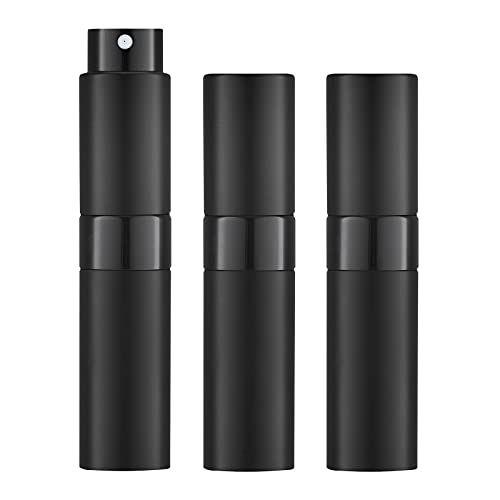
Shop refillable travel perfume atomizers
As an Amazon Associate, NeedleStyle earns from qualifying purchases.
$9.99 In Stock
Paid link · price checked October 23, 2026 09:18

$6.79 In Stock
Paid link · price checked October 23, 2026 09:18

$9.99 In Stock
Paid link · price checked October 23, 2026 09:18
Quick answer: spray the heavier scent first (woody, amber, vanilla or musk) and the lighter one over it: florals, then citrus, green or aquatic. Five of the seven guides that name an order say so; two start light. An eau de parfum lasts 5–10+ hours on the guides’ tables, an eau de toilette 3–6, a parfum 6–24+.
How to use it
Pick your first perfume’s scent family and strength, then the one you want to layer with it (or none, to see how long one bottle lasts), and how long you need it to last. The guide says which goes on first and why, whether the guides pair those two families, the steps and how many sprays, and draws every guide’s own hours for parfum, EDP, EDT and EDC against the hours you picked. Under every line are the guides’ own words and a link to the page they come from.
Eau de parfum vs eau de toilette vs parfum: how long each lasts
| Strength | Perfume oil, every guide | Hours, every guide | Guides that give hours |
|---|---|---|---|
| Parfum (extrait) | 20–40% | 6–24+ hours | 2 of 7 |
| Eau de parfum (EDP) | 12–20% | 5–10+ hours | 4 of 7 |
| Eau de toilette (EDT) | 5–15% | 3–6 hours | 4 of 7 |
| Eau de cologne (EDC) | 2–6% | 1–3 hours | 3 of 7 |
The strength on the label is how much perfume oil is in the bottle, and the guides do not agree to the percent. Man of Many: “The percentage ranges you’ll see repeated everywhere (EDT at 5–15%, EDP at 15–20%) are industry conventions, and not enforceable standards.” A perfumer quoted by Marie Claire: “I have seen brands call a 15% concentration an eau de parfum and other brands call it an eau de toilette—it comes down to how the fragrance itself feels”. And the hours are a start, not a promise. The Fragrance Society: “What lasts eight hours on one person may fade within three on another, regardless of concentration.”
Each guide’s own numbers
| Guide | Parfum | EDP | EDT | EDC |
|---|---|---|---|---|
| Marie Claire | 20–40% | 12–20% | 8–15% | — |
| BEAUTY/crew | 20–40%, 6–8 hours | 15–20%, up to 5 hours | 5–15%, 3 hours | 2–4%, 1–2 hours |
| Man of Many | 20–30% | 15–20%, 6–10 hours | 5–15%, 3–6 hours | 2–5% |
| Archipelago | — | 15–20% | 5–15% | — |
| Bon Parfumeur | over 20% | 13–20% | up to 12% | 6% |
| Free Yourself | 20–30%+ | 15–20%, 6–10+ hours | 5–15%, 3–6 hours | 2–5%, 1–3 hours |
| The Fragrance Society | 20–40%, 12–24+ hours | 15–20%, 6–8 hours | 5–15%, 4–6 hours | 2–5%, 1–2 hours |
Each row is that guide’s own table, never an average. Bon Parfumeur puts its eau de cologne at 6%, higher than the others’ 2–5%; Marie Claire’s eau de toilette starts at 8%, the others’ at 5%.
Which perfume goes on first
| Scent family | Notes | Weight | Goes on |
|---|---|---|---|
| Vanilla & sweet | vanilla, caramel, chocolate | A base note | First |
| Amber & spice | amber, cinnamon, cardamom | A base note | First |
| Woody | sandalwood, cedar, oud | A base note | First |
| Musk | musk | A base note | First |
| Floral | rose, jasmine, peony | A heart note | After a base note |
| Fresh & citrus | bergamot, citrus, green, aquatic | A top note | Last |
Most guides put the heavier scent on first so the lighter one is not buried. T3: “She explains that a general tip for layering is that whatever their form, heavier scents should always be sprayed or applied first.” Ajmal: “Pro Tip: Always spray your heaviest scent (the one with the most base notes) first.” Two guides start the other way. Ulta Beauty: “When layering perfumes, start with the lightest scent first and build toward the heaviest.” When both scents weigh the same, the stronger bottle goes first; T3 again: “making sure to apply the stronger scent first so as not to overpower the lighter one.”
Which perfumes layer well together
| Pair | What the guides say |
|---|---|
| Vanilla & sweet + Vanilla & sweet | Two heavy scents |
| Vanilla & sweet + Amber & spice | A classic pair |
| Vanilla & sweet + Woody | A classic pair |
| Vanilla & sweet + Musk | A base under a soft one |
| Vanilla & sweet + Floral | A classic pair |
| Vanilla & sweet + Fresh & citrus | The guides split |
| Amber & spice + Amber & spice | Two heavy scents |
| Amber & spice + Woody | A classic pair |
| Amber & spice + Musk | A classic pair |
| Amber & spice + Floral | A classic pair |
| Amber & spice + Fresh & citrus | A classic pair |
| Woody + Woody | Two heavy scents |
| Woody + Musk | A base under a soft one |
| Woody + Floral | A classic pair |
| Woody + Fresh & citrus | A classic pair |
| Musk + Musk | One family, a shared note |
| Musk + Floral | A classic pair |
| Musk + Fresh & citrus | A classic pair |
| Floral + Floral | One family, a shared note |
| Floral + Fresh & citrus | A classic pair |
| Fresh & citrus + Fresh & citrus | A classic pair |
A classic pair is one the guides name. Ulta Beauty: “Vanilla + Floral: The sweetness of vanilla adds depth to delicate florals like rose, jasmine, or peony.” So Avant Garde: “Citrus + Woody (e.g., bergamot + cedarwood) – A crisp, sophisticated combination where citrus adds brightness and woods provide grounding warmth.” Two heavy scents of one family are the pair they warn about. Scento: “Combining two heavy fragrances, like intense gourmands or ouds, can feel overpowering and suppress the more subtle layers.”
Examples
- A vanilla EDP and a floral EDT for a workday: vanilla first, then floral: a classic pair. Vanilla is a base note, floral a heart note: 5 of the 7 guides that name an order put the heavier one on first. Your EDP: 5–10+ hours on the guides’ tables.
- A citrus EDT and a woody EDP from day into night: woody first, then fresh citrus: a classic pair. Woody is a base note, fresh citrus a top note: 5 of the 7 guides that name an order put the heavier one on first. Your EDP: 5–10+ hours on the guides’ tables; top it up for day into night.
- A vanilla EDP with a citrus EDT: vanilla first, then fresh citrus: the guides split: some pair sweet and crisp on purpose, Ulta Beauty warns “Sometimes the brightness of citrus doesn’t balance well with sweet notes like caramel or chocolate.”
- One citrus cologne for a few hours: a fresh citrus edc: 1–3 hours. None of the 3 guides’ tables gives an EDC 4 hours. Top it up later, or wear a stronger one. Moisturise first, spray your pulse points, never rub.
How to make perfume last longer
Moisturise first, with an unscented lotion. Beaut.ie: “Perfume lasts longer on oily skin so before applying it, moisturise using unscented body lotion.” Spray your pulse points (wrists, neck, inner elbows, behind the ears or knees), one or two sprays of each scent, and never rub your wrists together. A spritz on clothes outlasts skin. Man of Many: “Clothing holds scent longer because fabric doesn’t absorb fragrance the way skin does, so a spritz on a collar or jacket can outlast anything on your wrist by hours.” Keep the bottles somewhere cool and dark. T3: “Keeping your fragrances in a bright hot room is the worst place to store them as the light and heat affect the intensity, longevity and quality of your scent.”
What not to do
- Two bold, complex perfumes together.
- Rubbing your wrists together.
- A bathroom shelf or a sunny sill for the bottles.
- More than three perfumes at once: Blavity, “Instead, stick to a maximum of three layers and focus on balance and harmony.”
Where the guides differ
- Which goes on first: the heavier scent or the lighter one?
- How long to wait between them: a minute, or fifteen?
- Vanilla with citrus: a contrast, or a clash?
- A scented lotion first, or an unscented one?
- Try a pair on paper, or only on skin?
- Perfume in your hair?
- What the label’s percentage means
Every side is in the guide above, in its own words, in the folded box where the guides differ.
Perfume ideas
For bottles to try, see NeedleStyle’s perfume layering combinations, lotion and perfume combos, long-lasting perfumes, top-rated perfumes for women and perfumes on a budget. To find your style, the Style Quiz; for your colours, the Color Analysis Quiz; and for the makeup, Makeup for Your Eye Color.
The pages we read
Ulta Beauty: How to Layer Perfume & Fragrances; T3: How To Layer Perfume; T3: 10 expert-approved tips to make your perfume last longer; Anthropologie: How to Layer Fragrances; Scento: Fragrance Layering 101: Basics for Beginners; Escentual: 7 Expert Tips To Find The Best Fragrance Layering Combination; So Avant Garde: How to Layer Perfumes for a Custom Scent; Ajmal Perfumes: How To Layer Perfumes? A Beginner’s Guide To Fragrance; Marc-Antoine Barrois: How to layer perfume to create a singular signature; Blavity: Your Guide to Perfume Layering is Here; Superhype Magazine: Layering: The Art of Mixing Scents; Marie Claire UK: The Difference Between Eau de Toilette and Eau de Parfum; BEAUTY/crew: What’s the real difference between eau de parfum and eau de toilette?; Man of Many: Eau De Toilette vs Eau De Parfum (Which Lasts Longer & Smells Better?); Archipelago Botanicals: Eau De Parfum vs Eau De Toilette: What’s The Difference?; Bon Parfumeur: What is the difference between an eau de toilette and an eau de parfum?; Free Yourself: Perfume Vs Cologne Vs Toilette; The Fragrance Society: Concentration Matters; Beaut.ie: How To Make Perfume Last Longer; The Korea Times: Perfume guide: Application tips for lasting scent.
FAQ
Which perfume goes on first when layering?
Most guides say the heavier one: woody, amber, vanilla or musk first, then a floral, then citrus, green or aquatic on top. Two of the seven guides that name an order start with the lightest instead. When both weigh the same, the stronger bottle goes first.
What is the difference between eau de parfum and eau de toilette?
How much perfume oil is in it: 12–20% for an eau de parfum and 5–15% for an eau de toilette on the guides’ tables. An eau de parfum lasts 5–10+ hours on them, an eau de toilette 3–6.
Is parfum stronger than eau de parfum?
Yes. Parfum (extrait) has the most oil, 20–40% on the guides’ tables, and lasts 6–24+ hours on the two that give its hours, against 12–20% and 5–10+ hours for an eau de parfum.
How long does perfume last?
On the guides’ tables: parfum 6–24+ hours, eau de parfum 5–10+, eau de toilette 3–6 and eau de cologne 1–3. Your skin and the notes change it; woody and musky scents stay longest.
How do you make perfume last longer?
Moisturise first with an unscented lotion, spray your pulse points, never rub your wrists together, add a spritz on your clothes, and keep the bottle somewhere cool and dark, never in a bathroom.
Is cologne weaker than perfume?
An eau de cologne is the lightest strength on the guides’ tables: 2–6% perfume oil and 1–3 hours, against 5–15% and 3–6 hours for an eau de toilette and 20–40% and 6–24+ hours for a parfum. The guides say reapply it through the day, or wear a stronger one.
What perfumes go well together?
The pairs the guides name: vanilla and floral, citrus and woody, amber and musk, woody and spicy, florals and citrus, and musk under a light citrus. Two heavy scents of one family are the pair they warn about.
Can you layer vanilla and citrus perfume?
The guides split. Some pair a sweet gourmand with a fresh citrus for the contrast; others say the brightness of citrus does not always balance sweet notes like caramel or chocolate. Try it on your skin for a few hours before you buy a bottle.