
The best hairstyles for an off-the-shoulder dress keep your collarbones and shoulders on show.
A low bun, a sleek high ponytail, a braided updo or a messy low chignon does that best, because the hair sits up and out of the way.
Loose Hollywood waves, a half-up style or a curly bob work too, as long as the hair falls behind your shoulders or ends above them instead of covering the neckline.
The other thing to balance is volume.
The neckline is wide and already on show, so the hair should sit up and away from it or fall behind it, not pile onto the shoulders.
Then there’s the neckline’s shape: straight across both shoulders, dipped to one side, curved or ruffled.
Each style below says which one it suits.
Low Bun That Earns Its Polish

Everyone’s default move with an off-the-shoulder dress is a low bun, and that’s fine.
Except most people center it directly over the nape with a flat middle part.
Don’t do that.
A center part cuts the exposed skin visually in half, which is the opposite of what you want.
Comb all your hair over to one side with a deep side part first, twist it at the base, and let the bun sit slightly off-center at the nape.
It mirrors the asymmetry that most off-shoulder dresses already have built into the neckline, so the whole look reads as one intentional line instead of two competing ones.
The detail that makes this one look done instead of stiff: leave a single piece, about 1 inch wide, loose right at the nape before you twist everything else up.
It softens the line where the bun meets the skin so it doesn’t look shellacked.
This version suits a straight-across off-shoulder neckline best, the kind that sits evenly on both shoulders rather than dipping to one side.
On that shape, the deep part does the asymmetry work the dress needs, and the bun stays out of the way of all that shoulder.
Braided Updo for Maximum Neckline Coverage

If you want more texture at the back than a plain bun gives you, feed a braid into a low chignon.
I’d actually skip the standard 3-strand braid into a bun, honestly.
It shows up in literally every bridal and prom roundup ever written, and it’s started to look a little generic.
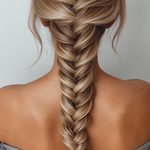
A fishtail braid into the same chignon reads less bridal, more like something you’d wear on a random Saturday, and it still gives you that same coverage.
Start the braid at the crown, not lower, so it has somewhere to go as it feeds down into the twist at the nape.
Leave the last 2 inches of the braid loose before you pin it under the twist.
That loose tail is what keeps it from looking too tight and competition-ready.
And if your hair only hits collarbone length, don’t count yourself out of this one.
Clip in a few extra pieces at the crown before you start braiding and the length evens out fine.
Use a few bobby pins to keep the clip-ins from slipping.
From the front, nobody can tell.
Hollywood Waves With Shoulder-Grazing Bounce

Tight finger waves pinned flat against the head look costume-y on most off-shoulder cuts.
But on bare shoulders they tend to read more “1940s photo shoot” than “normal person at an event.”
That’s not a knock.
It’s just not what most necklines need.
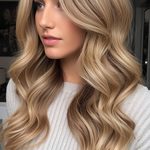
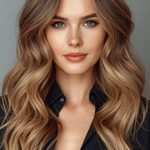
The loose, brushed-out curl is the version that actually works for daytime as well as evening, which makes it more useful across the board.
Set the curls with a curling iron about 1.5 inches wide, curling away from the face section by section.
Once everything’s cool, run a wide-tooth comb through to break the curl up into a softer wave.
That brushing-out step matters more than people think.
It’s the difference between ringlets and movement.
You want the waves to end a good 1 to 2 inches past the neckline, not bunched right at the fabric line.
Leaving the curl tight and springy makes the whole silhouette top-heavy.
It fights the neckline instead of framing it, because all that volume pulls your eye up and away from the shoulders the dress is supposed to be showing off.
Loose and brushed out.
That’s the version I’d wear.
Half-Up Style That Splits the Difference

Half-up is the safest pick on this entire list.
That’s not really a compliment.
It’s the hairstyle equivalent of ordering a side salad because you can’t decide on the entree.
It works.
It’s inoffensive.
But it’s rarely the thing you remember.
Only pull back the section between your temples, nothing lower, so you get height at the crown without fully covering the shoulder area.
Secure it with a single pin crossed in an X shape underneath, which keeps it flat against the head instead of creating a weird visible lump.
It’s best suited to necklines that sit evenly across both shoulders rather than a one-shoulder cut.
The symmetry of the pulled-back section matches the symmetry of the dress.
But because it’s the safe choice, I’d actually nudge most people toward the braided updo or the messy low chignon instead of defaulting here just because it’s easy.
Easy isn’t the same as right for the dress.
High Ponytail, Slicked Tight


A high ponytail is the opposite move from the low bun, and on the right neckline it’s better.
It puts the collarbone and shoulder line front and center with nothing competing for attention behind it.
Part your hair straight down the center before brushing everything up, which keeps the base symmetrical even though the finished tail sits high and sharp.
Wrap a thin strand of hair, about 1/2 inch wide, around the base of the elastic to hide it.
Every time, no exceptions.
A bare elastic makes the whole thing look unfinished.
The placement matters more than people realize.
The ponytail needs to sit directly above the crown, not tipped back toward the nape.
A ponytail tipped toward the back loses that lifted line, and lift is kind of the whole point of this style on a shoulder-baring dress.
Setting it too low turns it into, well, just an ordinary ponytail, and it stops doing the job the neckline needs it to do.
Up high, or not at all.
Undone Updo That Looks Accidentally Romantic

This one gets filed under “bridal” constantly, and honestly, I get why.
Loose, romantic hair reads as wedding-coded pretty fast.
But it’s actually the most forgiving option on this whole list for hair that didn’t cooperate with you that day.
Humidity won, or you ran out of time, or your curls fell flat by hour two.
This style absorbs all of it.
Twist the hair loosely at the nape rather than braiding it.
Braids add structure.
This look wants none (that’s the point).
Before you pin the twist, pull a few pieces loose at both temples so they frame the face instead of being scraped back tight.
It suits necklines with a curved or ruffled edge rather than a flat, straight bodice, because the softness of the hair echoes the softness of that neckline shape.
Put this same loose twist with a stiff, straight-edged structured neckline and the two don’t talk to each other the same way.
Curly Bob That Frames a Bare Neckline

If your hair is already short, don’t try to force it into an updo it can’t do.
A curly bob that grazes the shoulder can actually show off a bare neckline better than hair twice as long, as long as you curl it the right direction.
Diffuse your hair with your head tipped forward first.
This builds root lift so the bob doesn’t sit flat and heavy against your scalp.
Here’s the part that actually matters: curl the ends under, toward the neck, not outward.
Curling outward flips the hair away from the neckline and hides exactly the skin this dress is meant to show off.
That defeats the entire purpose of wearing an off-the-shoulder cut in the first place.
This works best on necklines that sit just below the collarbone rather than a straight-across cut.
The bob’s shorter length naturally lands around that same area, so the two shapes end up working together instead of fighting for the same real estate.
Faux Bob for Long Hair

I love this trick, but I’d only use it on a one-shoulder dress.
That’s not a small caveat.
It’s basically the entire rule for whether it works or not.
Sweep all your hair to one shoulder with a deep side part.
Then wrap the ends under and pin them tight against the skull, using enough bobby pins that nothing shifts, so no length shows below the jawline.
From the front, it genuinely looks like a blunt bob, even on hair that goes well past your bra line underneath.
The problem is the back.
On a straight-across off-shoulder neckline, the second you turn your head or someone catches you from behind, the wrap is obvious.
There’s a visible lump of pinned-under hair where a real bob would just end.
On a one-shoulder dress, though, all that hair is already pooled on one side anyway, so the wrap blends right into the draped fabric and nobody’s the wiser.
Built for one-shoulder, not for the symmetrical cut.
Beehive Pulled Straight From 1965

This is the one style on the list I’d actually warn people off for daytime events.
A beehive reads formal fast, and past a certain point it tips into costume territory, especially if the rest of the outfit isn’t equally structured.
Pair a towering beehive with a casual daytime dress and it looks like you got ready for a different party.
If you’re going to do it, backcomb only the crown section.
Keep the sides and the nape completely smooth so it doesn’t look matted all over.
Build the height to roughly 3 to 4 inches above your natural hairline.
Any more starts looking like a wig.
It pairs best with a structured, straight neckline rather than a soft ruffled one, since the sharp geometry of the hair matches the sharp geometry of the bodice.
Put a beehive over a ruffled neckline and the two textures just argue with each other.
Plaits With Actual Dimension

A plain 3-strand braid is fine, but if you actually want volume above the exposed neckline, the waterfall and coronet versions do more work.
For a waterfall braid, only pick up 2 or 3 strands per pass so sections drop loose as you go instead of getting locked into the braid.
That’s what gives it that cascading look instead of a flat plait.
A coronet braid wraps from ear to ear across the crown, basically a horizontal braid that sits like a built-in headband.
These textured braids add the most noticeable volume if you’ve got fine or thin hair.
They do more for that hair type than a plain braid would, since the dimension comes from the braid structure itself rather than from how much hair you’ve actually got.
On thin hair, a plain braid can look a little sad and stringy by comparison.
The waterfall fixes that.
Flower Crown Without the Costume Factor

A full all-around flower crown reads like a costume prop indoors.
It’s one of those styles that photographs gorgeous outside in golden light.
Then it looks like you wandered in from a renaissance fair the second you’re under regular ceiling lighting.
A half-crown fixes this, and it’s the only flower crown I’d wear indoors.
Sit the wire or ribbon base about 1 inch back from the front hairline, not right at the edge.
That keeps it from looking like a literal headband with flowers glued on.
Bind the stems onto the wire at 2 to 3 inch intervals as you go.
You want them close enough together that no bare wire shows through, but not so dense it gets heavy and droops by the end of the night.
This version works best with minimally embellished necklines (plain fabric, no beading, no heavy lace).
That way the florals get to be the detail instead of competing with embroidery or sequins for attention.
Boho Half-Crown Braids for a Looser Take

This is a looser cousin of the goddess braid crown further down this list, and it’s a good option if the flower crown above still feels like too much commitment.
Start 2 fishtail braids behind each ear and bring them together where they meet at the center back of the head.
The hair underneath the braids stays completely loose.
You’re not gathering it into anything, it just hangs free below the braided section.
Weave the flowers in as you braid, not tucked in afterward.
Flowers tucked in afterward tend to slide out, and you’ll spend the evening picking petals off your shoulders.
Winding them in as you go anchors them into the actual braid structure.
This one’s inherently casual-leaning, so keep that in mind when you’re matching it to formality, which brings me to the stricter version.
Goddess Braid Crown, the Neat Version

This is the one crown braid that actually belongs at a formal event.
The boho version two sections back is too casual for anything black-tie.
It’s got that loose, flyaway romance built in on purpose.
The goddess crown is the opposite.
Tight and flat, on purpose.
Part the hair ear to ear across the back of the crown before you start, then work 3 even braids from that part.
Wrap each braid’s end across the front hairline and pin it down at the opposite temple.
That’s what makes the braids cross over each other in a woven band rather than running in one straight direction.
Keep the braids tight and flat with no loose texture pulled out anywhere, which is the exact opposite instruction from the boho version.
That tightness is what makes it read formal instead of festival.
Messy Low Chignon With Loose Waves on Top

Closing out with the one I’d actually reach for most often, because it works for more occasions than almost anything else on this list.
It’s a loosely gathered low bun with soft curl on top.
That combo reads polished enough for an evening event but relaxed enough that you could wear it to a daytime thing too without looking overdressed.
Curl with a 1 1/4 inch iron.
You want loose body here, not tight ringlets.
The curl is just there to add texture before it gets gathered up.
Backcomb only at the crown before you pull everything loosely back into a twist at the nape.
The backcombing is what gives it that lifted, slightly undone look instead of a flat scalp.
Leave a few thin face-framing pieces out (about 1/4 inch each), along with some loose ends sticking out of the twist itself, for movement.
It’s not a style that needs to look perfect.
Honestly, that’s the whole appeal: it looks more done than it actually is.
More from Needle Style: