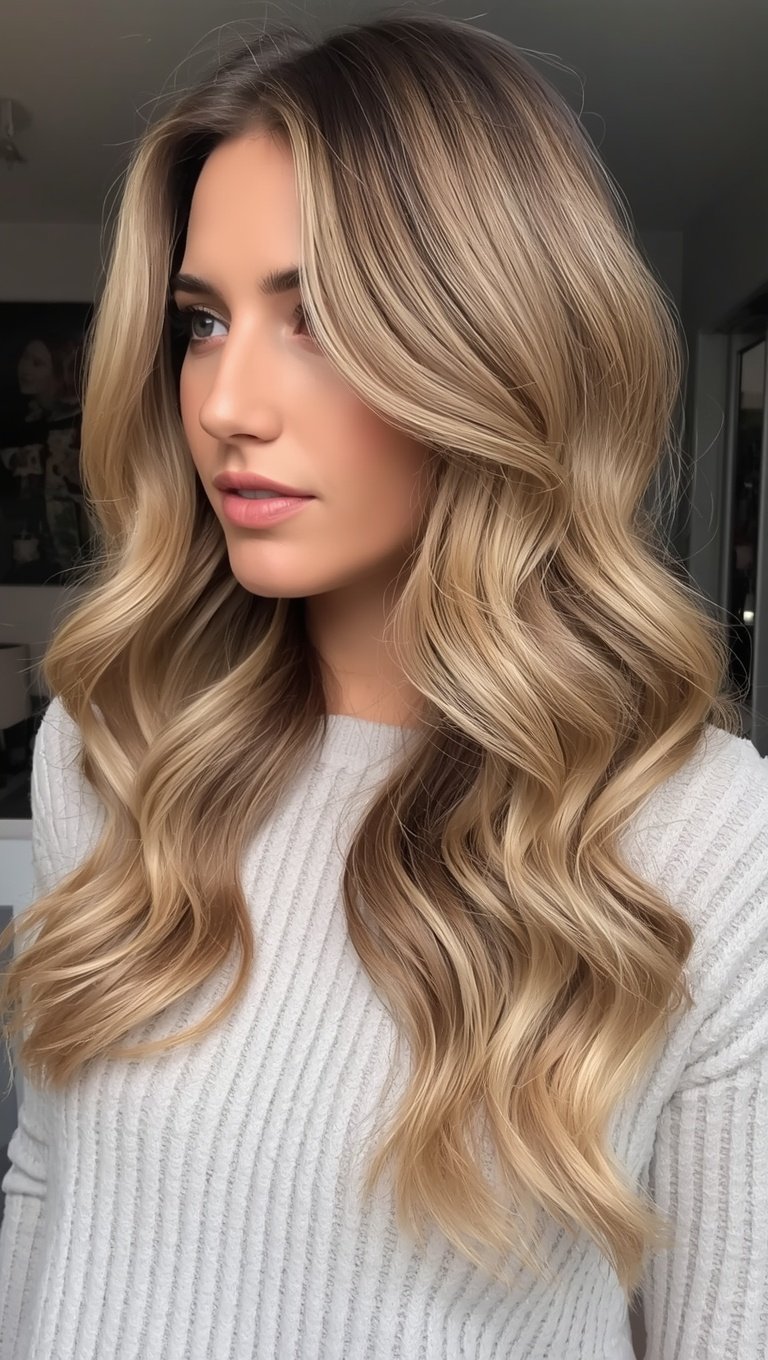
Balayage is a hand-painted technique, not a foil situation.
Your colorist basically sweeps the color on freehand, focusing on the mid-lengths and ends.
That’s the whole secret, honestly.
Because the color starts lower and blends upward, there’s no harsh line waiting to show up at your part.
I remember asking my colorist why my old highlights looked so stark after a month, and she explained it in the simplest way.
Foil highlights go from root to tip in a straight line.
Balayage mimics the way the sun naturally lightens hair, which is heavier toward the ends.
So when your roots grow in, they’re just blending into a soft gradient instead of creating contrast.
It’s such a small technical difference, but it changes everything about maintenance.
When I switched from traditional highlights to balayage, I noticed the difference around week five.
There was no visible line, just a soft, sun-kissed fade.
And honestly, that alone made me feel like I’d found a little life hack.
Choosing the Right Base Color for Longer Wear

This part matters more than people think.
Your natural base color is basically doing half the work here.
If you go too light too fast, the regrowth becomes more noticeable no matter how good the technique is.
When I first tried balayage, I made the mistake of going almost platinum at the ends.
It looked stunning for about a month, but the contrast with my natural dark brown roots got obvious fast.
My colorist gently suggested we tone down the lightness next time and lean into a warmer, closer-to-my-base shade.
That single change extended my time between appointments by weeks.
So if you’re going in for a consultation, ask your colorist to keep the lightened pieces within two or three shades of your natural color.
It sounds less exciting, I know.
But it’s the difference between “wow, your hair” and “when’s your next appointment.”
Honestly, subtle is where balayage really shines anyway.
The Placement Pattern That Grows Out the Smoothest

Not all balayage is created equal, and placement is everything.
Face-framing pieces plus a soft sweep through the ends tend to grow out the most gracefully.
Heavy, chunky pieces close to the root are the ones that get awkward fast.
I learned this the hard way with a colorist who went a little heavier than I wanted near my crown.
It grew out fine at first, but by month three it looked more like grown-out highlights than balayage.
Now I always ask for what my current colorist calls a “root smudge,” a soft shadow root that blends the balayage into my natural color right at the top.
It’s honestly the single tip that made the biggest difference for me.
If your colorist offers this, say yes without hesitating.
It adds maybe ten extra minutes to your appointment, but it buys you weeks of good hair days.
Home Care That Protects Your Blend

Your shower routine matters way more than people realize.
Hot water strips color fast, and balayage is no exception.
I switched to lukewarm rinses years ago and my color noticeably holds its tone longer.
A purple or blue shampoo, depending on whether you’re blonde or brunette balayage, helps keep brassiness away between salon visits.
I use mine about once a week, never more, because overdoing it can turn things a little flat or ashy.
Also, and this one surprised me, a good leave-in treatment does more for color longevity than the shampoo itself.
I started using a lightweight leave-in after every wash and my ends stopped looking dry within a month.
Dry, damaged ends grab and hold color differently than healthy ones, which throws off your whole blend.
So really, this is as much a hair health tip as a color tip.
Treat your ends like they’re doing you a favor, because they kind of are.
Trims Are Doing More Than You Think

I used to skip trims to “let my hair grow.”
Turns out that’s kind of backwards when it comes to balayage.
Split ends catch light differently and can make your color look duller and more uneven over time.
My stylist convinced me to start doing a small trim every eight to ten weeks, even when I wasn’t cutting for length.
The color looked so much crisper afterward, almost like I’d just left the salon again.
It’s a small appointment, usually quick, and it resets the whole look of your balayage without touching your length goals.
If you’re growing your hair out, ask for a “dusting” instead of a real trim.
That way you’re just cleaning up the very ends without losing the length you’ve worked for.
I do this every couple months now and it’s become one of my favorite little hair rituals.
Toning Appointments Are Your Secret Weapon

Nobody told me about toner appointments for the first year I had balayage.
Big mistake, honestly.
A toner refreshes the color without doing a full balayage redo, and it’s usually quicker and cheaper too.
Around the two-month mark, my balayage tends to shift slightly warmer, especially in the summer.
A quick toning session brings it right back to that cool, sun-kissed shade I love.
I book mine almost like a little maintenance ritual, something I actually look forward to instead of dreading.
It’s also a great time to check in with your colorist about how the grow-out is looking.
Sometimes they’ll add a few extra face-framing pieces if things have faded more than expected.
This one appointment type genuinely stretched my full balayage refresh from every three months to almost five.
If your salon offers it, don’t skip it.
Choosing a Colorist Who Actually Understands Balayage
This might be the most important section here, if I’m being honest.

Not every colorist who says they “do balayage” really specializes in it.
I went to two different salons before finding someone whose grow-out results actually matched what I wanted.
Ask to see photos of clients’ hair a few months after their appointment, not just the fresh, just-left-the-salon shots.
Anyone can make balayage look good on day one.
The real skill shows up in how it looks eight weeks later.
When I found my current colorist, I asked her directly how she thinks about regrowth before she even starts painting.
Her answer, about working with my natural part and hairline, told me she really got it.
So don’t be shy about asking these questions in your consultation.
It’s your hair and your money, and you deserve someone who’s thinking two months ahead, not just today.
Seasonal Adjustments Make a Big Difference

Something I didn’t expect was how much the seasons affect balayage upkeep.
In summer, natural sun exposure lightens my ends even more, which honestly extends my color a little longer.
Winter is trickier because there’s less natural lightening happening, so the contrast with roots can show a bit sooner.
I’ve started scheduling slightly more frequent toning sessions in winter to compensate.
My colorist also suggested going a touch darker with my base in colder months, which blends more seamlessly with less sun help.
It felt like such a small adjustment, but it made a noticeable difference in how long my color looked fresh.
If you live somewhere with real seasons, this is worth bringing up with your colorist.
Your hair care routine can shift a little too, since indoor heating tends to dry things out faster.
I add an extra hydrating mask into my routine every winter for exactly this reason.
Little seasonal tweaks like this keep everything looking intentional year-round.
Styling Tricks That Hide Regrowth Between Appointments

Even with the best balayage, there are days the regrowth feels more obvious than you’d like.
A few styling tricks have saved me more times than I can count.
Root powder in a shade close to your natural color, dusted right along the part, softens any contrast instantly.
I keep one in my bathroom drawer for exactly those in-between days.
A deep side part also works wonders because it naturally hides more of the root area than a middle part does.
Loose waves help too, since texture breaks up any visible lines way better than sleek, straight styles.
On days I really don’t want to think about my roots, I just curl my hair and call it a day.
Honestly, nobody notices what I’m noticing.
A cute headband or scarf works in a pinch too, and it doubles as a whole outfit moment.
These little tricks buy you time without any extra salon visits.
Products Worth Keeping in Your Routine

I’ve tried more color-care products than I’d like to admit.
A few have earned permanent spots in my shower.
A sulfate-free shampoo is non-negotiable at this point, since sulfates strip color so much faster than people realize.
I also swear by a weekly hair mask specifically made for color-treated hair, not just a regular deep conditioner.
There’s a difference, and my ends can tell.
A heat protectant before any hot tool use is another one I never skip anymore, especially since damaged hair fades color unevenly.
My personal favorite trick is adding a few drops of hair oil to my ends before bed on nights I’m not washing.
It keeps everything looking glossy and healthy, which honestly makes the color itself look more vibrant.
Little things like this add up more than one expensive product ever could.
Consistency really is the secret ingredient here.
Budgeting for Balayage the Smart Way
Let’s talk money for a second, because balayage isn’t always cheap.

The upside is that spacing appointments out further actually saves you money over time compared to monthly root touch-ups.
I mentally budget for a full balayage appointment every three to four months, with a quick toner session in between.
That rhythm has worked so much better for my wallet than the monthly cycle I used to be on with regular highlights.
Some salons also offer toner-only pricing that’s a fraction of a full color service, so it’s always worth asking.
I’ve saved myself a good amount by simply booking that instead of a full redo every time my color felt slightly off.
If cost is a concern, be upfront with your colorist about your budget and timeline.
A good one will build a maintenance plan around what actually works for you.
There’s no shame in asking for the budget-friendly version of anything.
Your hair can still look amazing without you spending a fortune every month.
Common Mistakes That Ruin the Grow-Out

I’ve made basically every mistake on this list, so let me save you the trouble.
Going too light too fast tops the list, hands down.
Skipping toner appointments is a close second, since that’s usually what makes color look brassy or dull before it’s even due for a redo.
Washing hair too often, especially with hot water, fades everything faster than people expect.
I also used to skip trims entirely, which made my ends look scraggly and dulled the whole effect.
Another one people don’t think about is switching colorists too often.
Every stylist has a slightly different technique, and constantly switching means nobody really gets to know your hair’s specific grow-out pattern.
I stuck with the same colorist for the past two years and the consistency alone made a visible difference.
She knows exactly where my natural highlights fall in summer and adjusts around them every time.
That kind of relationship is worth more than people give it credit for.
My Honest Final Thoughts on Long-Lasting Balayage

If there’s one thing I’d tell a friend starting out with balayage, it’s to be patient with the process.
The first appointment is rarely the perfect one.
It took me a couple of tries with different colorists before I found the placement and tone that actually worked with my hair and my lifestyle.
But once you find that sweet spot, balayage genuinely becomes the lowest-maintenance color option I’ve ever had.
I go longer between appointments, I spend less overall, and I never dread that awkward root line anymore.
So if you’re on the fence, just know it gets easier once you find your rhythm.