I used to stand in the drugstore foundation aisle for a solid twenty minutes, picking up shades, holding them to my wrist, and quietly spiraling.
Everything was too dark.
Too orange.
Too yellow-warm for my almost-translucent skin.
I’d go home with something “close enough,” blend it on, and look in the mirror feeling like I was wearing a mask.
That feeling?
I know you know it.
It took me sitting down with a makeup artist friend — the kind who works with brides and editorial shoots — to realize I’d been doing almost everything wrong for my fair skin.
And honestly?
The secrets she shared changed everything for me.
My First Lesson: Stop Fighting Your Undertones

This is where most of us with pale skin go completely sideways.
We assume “fair” is just one thing.
But your fair skin has a specific undertone — pink, peachy, neutral, or even slightly olive — and learning yours is the single most important thing you can do before buying a single product.
When I finally figured out I was cool-toned with pink undertones, I stopped buying warm-beige foundations that made me look like I’d rolled in a bag of flour.
Instead, I started reaching for shades with soft rose or neutral bases, and suddenly my skin looked like skin.
Real, alive, glowing skin.
A good trick I love is to look at the veins on your inner wrist in natural light.
Blue or purple veins usually point to cool undertones.
Green veins usually mean warm.
A mix?
You’re probably neutral, lucky you.
Understanding this one thing saves you so much money and so much frustration standing under harsh drugstore lighting.
My Favorite Way to Prep Pale Skin Before Anything Else

Okay, so here’s something makeup artists are a little obsessed with that most of us skip entirely.
Skin prep.
And I don’t just mean slapping on moisturizer.
I mean intentional prep that actually changes how your makeup sits on fair skin.
Because pale complexions tend to show texture and dryness so much more than deeper skin tones do.
When I started using a thin layer of facial oil before my primer, everything sort of clicked.
My foundation stopped looking patchy.
It stopped settling into my pores in that unflattering way.
The whole look just became softer and more blended.
I love using a drop of rosehip oil mixed into my primer — it sounds fussy, but it takes about four seconds and the result is this gorgeous, cozy dewiness that no filter can fake.
If your skin skews oily, a lightweight hyaluronic serum does the same job without the extra slip.
The point is, the canvas matters.
Fair skin is basically a white sheet of paper — everything shows, for better or worse.
Why the Right Foundation Formula Is a Whole Mood

There’s a difference between a foundation that covers your skin and one that works with it.
And for fair complexions, this distinction is everything.
Heavy, full-coverage formulas can look cakey and mask-like on pale skin, especially in daylight.
I learned this the hard way during a brunch I attended where every photo made me look kind of gray and flat.
Not the vibe.
Now I reach for medium-buildable coverage foundations with a satin or skin-like finish.
They let a little of your natural skin texture come through — the tiny freckles, the subtle flush — and that’s what makes fair skin look beautiful rather than blank.
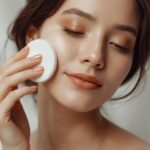
A pro tip from my makeup artist friend: she always applies foundation with a damp sponge on fair skin, pressing rather than dragging.
It sheers out the formula just enough to avoid that “painted on” look.
You can build in targeted spots — around the nose, any redness — without overwhelming the whole face.
And please, if the foundation has even a hint of orange or bronze to it, put it back on the shelf.
Your undertone won’t forgive you.
My Concealer Secrets for Fair Skin That Actually Look Natural

Concealer is the step where I see the most mistakes on pale skin, and I say that as someone who made every single one of them.
Going too light under the eyes?
That’s what creates the white-ghost situation that photographs terribly.
The secret — and makeup artists genuinely swear by this — is to match your concealer to your skin tone, maybe just one tiny shade lighter, rather than trying to over-brighten.
When I switched to a concealer that matched my foundation almost exactly, my under-eye area started looking rested instead of highlighted in a harsh way.
The other thing I love is using a peach or salmon color corrector underneath my concealer if I have deep blue or purple shadows.
It neutralizes without adding excess product.
And you set it with the lightest possible dusting of translucent powder — just a whisper of it — so it doesn’t crease.
It sounds like a lot of steps, I know.
But once you do it a couple of times, the whole thing takes maybe ninety seconds.
The Blush Trick That Makes Fair Skin Look Alive

I truly believe blush is the single most transformative product for pale skin.
More than highlighter, more than contour — it’s blush that makes you look like a real, warm, present human being.
When I first started wearing blush properly, my mom literally stopped me and said, “you look so healthy.”
And she was right.
For fair skin, I’m obsessed with soft pinks, mauves, and peachy corals.
They mimic the natural flush you’d get from a cold morning walk or a really good laugh.
The application matters too — rather than swiping it in a straight stripe across the cheeks, try smiling softly and pressing the blush just onto the apple, then blending it up gently toward the temple.
It looks so natural, so cozy.
A cream blush layered under a powder blush gives this incredible depth that almost looks like the color is coming from within your skin.
I stumbled onto that technique by accident, and I’ve never gone back.
How I Learned to Contour Without Looking Muddy

Here’s the thing about contouring fair skin — using the wrong shade turns you into a walking mudslide.
I know.
I’ve been there.
The rule that changed my contour game entirely is this: go cool and gray-toned, not brown.
Most contour palettes are designed for medium to deep skin tones, which means they have warm, bronze-y undertones that read as dirty streaks on pale complexions.
What you want instead is a taupe, a cool mushroom, or even a very soft gray-brown.
When I picked up a cool-toned contour powder for the first time, it actually looked like shadow — natural, dimensional, believable.
I like to apply it with a fluffy brush along the sides of the nose, just under my cheekbones, and softly along the hairline.
Nothing dramatic.
Just a little sculpting that catches light in the right way.
And blending is non-negotiable.
If you can see a line anywhere on your face, blend more.
Then blend again.
My Highlighter Philosophy for Pale Complexions

Okay I love highlighter so much, but there is such a thing as too much — especially on fair skin.
Because we’re already light, an aggressive highlighter can make us look washed out instead of luminous.
The trick?
Soft, skin-like highlighters over blinding, chunky glitter formulas.
I’m obsessed with champagne, pearl, and warm ivory highlighters that melt into fair skin and just make it glow.
Avoid anything with silver or white shimmer — they tend to sit on top of the skin rather than blending in, and on pale complexions they can look almost gray in certain lights.
My favorite placement is just above the cheekbone, not on it, the inner corners of the eyes, and a tiny dab above the bow of my lip.
That last one?
An absolute game-changer in the best way — makes lips look fuller without any liner drama.
Apply it with your ring finger for the most skin-like, diffused finish.
No brush, no sponge, just a gentle press and tap.
The Eye Makeup Shades That Were Made for Fair Skin

I used to think I couldn’t pull off bold eye looks because of my pale skin.
Turns out, I was just using the wrong shades.
Makeup artists who work with fair-skinned clients lean heavily on dusty mauves, warm taupes, terracotta, and soft plums.
These shades work with the natural pigment in light skin rather than competing with it.
When I tried a dusty rose crease look paired with a sheer champagne lid, I looked like a completely different person — in the best way.
Warm bronze is another one I love deeply for pale skin.
It gives this soft, sun-kissed, editorial vibe without looking costume-y.
Stay away from heavy black shadow on the whole lid as an everyday look — it can overwhelm fair features if it’s not balanced with the right contrast.
Instead, try black or very dark brown only on the lash line and as a liner detail, with the rest of the shadow softened.
It’s the kind of balance that makes the eyes pop without fighting the rest of your face.
Why Brow Shades Make or Break a Fair Complexion Look

Nothing I’ve learned has had a more immediate impact than getting my brow shade right.
For years I was filling in my brows with an ash-brown pencil that matched my hair color exactly.
The result was harsh, almost theatrical.
I looked permanently surprised.
The secret that every makeup artist knows is that brows for fair skin should be one to two shades lighter than your natural hair color, with a slightly warm or taupe undertone.
Even if you have dark hair, softening the brow shade creates a more harmonious, natural look with your pale complexion.
When I switched to a soft warm taupe, the whole balance of my face shifted.
My eyes looked bigger.
My features looked more proportionate and soft.
And I stopped feeling like my brows were the first thing anyone noticed.
I also use short, hair-like strokes rather than filling in the whole shape solidly.
It’s the difference between brows that look drawn and brows that look grown.
My Honest Thoughts on Setting Powder for Pale Skin

Setting powder is one of those things that can either lock your look in beautifully or completely kill it.
And for fair skin, the wrong powder is a disaster.
Pink-toned or lavender setting powders?
Run.
They sit on pale skin and make you look ashy, almost blue, in photos.
What you want is a truly translucent powder, one that disappears on the skin and adds no color whatsoever.
Or, if you want something with a tiny warmth, a very light banana powder can add the softest peachy-yellow glow that flatters fair complexions beautifully.
I set only the areas where I tend to get oily — mostly my T-zone — and leave the rest of my face dewy.
Baking the whole face, that heavy powder-everywhere technique, tends to flatten the natural luminosity of fair skin.
Light-handed application is always the move.
I use a big, fluffy brush and literally tap off most of the powder before it even touches my face.
That little habit took my makeup finish from “powdery” to “polished.”
The Lip Colors I Keep Coming Back to for Fair Skin

Lip color is where fair-skinned girls genuinely have a sort of magical advantage.
So many shades look stunning against a pale complexion.
But there are a few categories I keep reaching for again and again.
Soft nudes that lean pink rather than beige are my everyday go-to.
Warm beige nudes on fair skin tend to wash out the face entirely, making lips disappear and the whole look fall flat.
A pinky-nude, something close to your natural lip color but just a touch more defined, is always beautiful.
Then on the other end of the spectrum — a true classic red.
Red lips against fair skin are iconic for a reason.
The contrast is stunning.
I love a blue-toned red for cool complexions and a brick or tomato red for warmer fair skin.
And for a cozy, romantic everyday look?
A soft rosy mauve is basically my signature.
It works morning to evening, dressed up or down, and it just makes fair skin look radiant and warm.
My Personal Hack for Making Fair Skin Look Sun-Kissed (Without Looking Orange)

The number one thing I hear from other fair-skinned girls is that they want warmth without looking fake.
I get it completely.
The secret is layering instead of one heavy product.
I start with a very light, water-based self-tanner mixed into my moisturizer — just a few drops — and I apply it only to the areas where the sun would naturally hit: forehead, nose bridge, cheeks, tops of the shoulders.
It builds gradually over a few uses into the most natural, believable warmth.
On top of that, a bronzer with a warm golden or peachy undertone (never orange, never muddy brown) swept lightly across the same sun-kiss points adds dimension.
I also love a sheer, tinted face mist with a hint of bronze — I spray it from arm’s length for the most diffused, editorial finish.
The combination of these three things gives pale skin this gorgeous, lived-in warmth that looks like you just got back from a coastal weekend.
And it photographs beautifully.
No filter needed.