
My cousin did her engagement photos in January, in a field outside town with snow up to her ankles.
She’d planned the whole thing around a white dress and a silver puffer.
The dress disappeared into the snow, the puffer made her look like a sleeping bag, and the only shots she framed were the ones where she’d borrowed her fiancé’s wool coat.
Winter engagement outfits can look warm and actually be warm, without a puffer in a single frame.
It comes down to the coat, the knits, colors that show up against snow, boots you can walk in, hair that survives wind, and your hands, because a ring shot with red knuckles is nobody’s favorite.
If you want ideas for every season, our engagement photo outfits guide covers spring through fall.
Everything here is for cold days and snow.
Why the Puffer Stays in the Car

I love a puffer.
I live in mine from November to March.
But in photos, a puffer turns two people into two marshmallows.
It hides your shape, it rustles every time you hug, and the shiny fabric throws little hot spots of light that the camera picks up.
But wear it for the walk in.
Honestly, that’s what it’s for.
Keep it on between spots, then toss it in the car right before the shot (I once watched a friend’s fiancé sprint back to the car with two puffers in his arms, and it’s the funniest outtake they have).
Most winter sessions I’ve heard about run 60 to 90 minutes, and you’ll spend a good chunk of that walking, so your warmest layer should be the one you can take off fast.
The rule I go by: dress for the photos, then hide the warmth underneath where nobody can see it.
Fleece-lined tights.
A thin thermal top under your sweater.
Wool socks inside your boots.
That’s how you stand in a wool coat at 20°F without looking like you’re headed for the ski lift.
Start With the Coat

In winter photos, the coat is the outfit.
It’s the biggest thing in the frame, so spend your energy (and your budget) there and keep everything under it simple.
A long wool coat in camel, cream, gray or a deep color is the safest bet.
And long matters.
A coat that ends about 4 inches below the knee makes a clean line from shoulder to boot, and it moves when you walk, which is where a lot of the best candid shots come from.
A belt or a wrap tie gives you a waist so you don’t look like a box.

Texture helps a lot, too.
I noticed it the first time I scrolled through a friend’s gallery: the tweed coat shots looked warm, and the plain ones looked a bit flat.
Tweed, boucle, herringbone, anything with a little pattern in the weave looks cozy without trying.
A hood is a sweet touch if snow is actually falling, and it frames a face in a way a hat sometimes doesn’t.
For your partner: a dark overcoat, or a peacoat over a chunky knit.
A shearling-collar jacket works too.
Coordinate, don’t match (that’s pretty much the whole rule for couples).
If you’re in camel, navy or charcoal on them looks great.
Two camel coats side by side look like a uniform.
Don’t own a long wool coat?
Borrow one.
My cousin’s best photos were in a borrowed coat, remember.
Ask a friend, check a consignment shop, or rent one for the weekend.
Nobody looking at your photos will know it isn’t yours, and it costs a lot less than buying a coat you’ll wear twice.
Knits That Photograph Soft

If you take your coat off for a few frames (and you should, even for a minute), the knit underneath becomes the star.
Chunky cable knits, ribbed turtlenecks, a fuzzy mohair crewneck.
They catch the light and look touchable, which is exactly the feeling a winter session is going for.
A turtleneck is my favorite neckline for cold photos.
It keeps your neck warm, it frames your face, and it looks clean under any coat.
Our turtleneck outfits post has a lot of ways to wear one.
Just skip anything with a big logo or a busy pattern near your face.
Here’s a look that only works for one photo: the off-the-shoulder sweater.
It’s gorgeous for exactly one frame, and then you’re freezing and everyone can tell.
If you love it, save it for the very last shot, right next to the car.
Colors That Show Up Against Snow

Snow is one giant white backdrop, and a white outfit on a white backdrop disappears.
Ivory and cream can work if your coat is darker.
An all-white look in a snowy field mostly reads as a floating face.
So go for rich colors.
They pop.
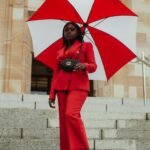
Burgundy, forest green, deep navy, rust, mustard, a warm coral beanie.
Even one colored piece, like a hat or a scarf, gives the eye somewhere to land.
A big scarf is the cheapest way to add color.
Blanket scarves are great because you can wrap them a few different ways during the session, and it looks like two outfits.
Plaid in red or green is the classic.
A solid in mustard or rust feels a little more modern.
Either way, keep the rest of the outfit quiet so the scarf gets to be the loud one.
Think about the backdrop, too.
Evergreens behind you make red or cream glow.
Bare trees and a gray sky love a camel coat with a bright scarf.
If you’re shooting in town with brick and string lights, jewel tones look like a holiday card.
A Dress and Tights, If You Want One

You can wear a dress in the snow.
You just do it the smart way: a sweater dress or a long-sleeve midi in a heavier fabric, opaque fleece-lined tights, and a long coat worn open so the dress shows.
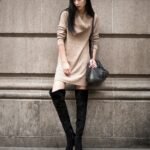
Black tights with a black dress under a camel coat is about as classic as it gets, and it’s warm.
Sheer tights are pretty for about 3 minutes in January.
I wore them to an outdoor holiday market once, and turns out that’s exactly how long it takes to regret it.
After that they’re just cold legs.
That’s a one-photo look.
Long flowy gowns in snow look amazing on Pinterest and are a lot of work in real life.
The hem gets wet, the fabric gets heavy, and you’re holding it up the whole time.
If you want one anyway, plan it for the last 10 minutes and keep a blanket in the car.
Boots You Can Actually Walk In

Your photographer will probably walk you into a field, up a hill or down a trail to the good spot.
Heels sink into snow and slide on ice, so this isn’t the session for them.
Lace-up leather boots, a lug-sole Chelsea or a tall riding boot over tights all look good on camera.
If you want a little height, pick a block heel under 2 inches with a grippy sole.
Plus, waterproof matters more than you’d think.
Wet socks end a session faster than cold hands do.
Your partner needs real boots too.
Dress shoes on a snowy trail look out of place and slip like crazy.
Brown leather lace-ups or clean, dark hiking boots both work, and they look right next to yours.
Break them in first.
I wear new boots around the house for a few evenings before any big day, and it’s worth it.
New boots plus a long walk in snow equals blisters, and you’ll see it on your face in the photos.
Hats, Hair and the Wind

A knit beanie or a pom-pom hat is cute and keeps your ears from going pink.
Put it on while you’re getting ready, right there at the bathroom mirror, and do your hair around it.
Style your hair first and add the hat on location, and it flattens the crown and leaves a weird puff at the sides.
But wind is the real problem.
Loose waves with a little texture spray hold up better than sleek, straight hair, which blows across your face in every frame.
Pin the front pieces back with bobby pins that match your hair color, and tuck a few extras in your coat pocket.
If the forecast says gusty, a low bun or a loose braid is the easy choice.
Snow on the hat looks magical.
Snow melting into curled hair is less magical, so keep the hat or the hood on for the falling-snow shots and save the curls for the rest.
For makeup, I go lighter on blush than I would indoors, because cold air turns cheeks and noses pink on its own.
A creamy lip holds up better than a matte one in the wind, which dries everything out.
Gloves Off for the Ring Shot

There will be a ring shot, and your hands are in it.
Cold makes knuckles red and fingers stiff, so keep your gloves on until the last possible moment.
I tuck a $2 hand warmer into each glove and pull them off maybe 30 seconds before the photographer is ready.
I always do my nails the night before.
A sheer pink, a milky white or a soft nude flatters a ring in any light.
Deep red is gorgeous too (it’s my own winter color), but chips show in close-ups.
Whatever you pick, add a fresh top coat and give it a good 12 hours to set before gloves go on, because glove fabric on soft polish leaves marks.
Bring hand lotion and lip balm in your pocket.
Dry knuckles look awful in a close-up.
And do a quick swatch of your polish next to your coat sleeve the week before, so you know the colors don’t fight.
The Light Goes Early, and the Snow Bounces It

Winter sessions run on a short clock.
In December the sun can be down before 5 p.m. across a lot of the northern US, and the softest light is the last hour before it goes.
So plan backward from sunset, not forward from lunch.
And snow is a free reflector, no joke.
The National Snow and Ice Data Center says it plainly: “Clean snow, however, reflects most of the visible sunlight.”
That light bounces up onto your faces, which is soft and flattering, and it’s also why bright colors look even brighter out there.
One more reason to skip head-to-toe white.
Here’s roughly how the day goes for the couples I know who’ve done a snow session.
Start getting ready about 2 hours before you need to leave, so nobody’s rushing hair in the car.
Pack the car like it’s a short road trip: the puffers, a blanket, a thermos of cocoa, a lint roller for the coats, extra bobby pins and a towel for wet boots.
You’ll use every one of them.
Then go home, get warm and look at the photos with something hot to drink, because you earned it.
A look that only lasts for one photo isn’t a good look.
The outfits that hold up for 90 minutes in the snow are the ones you’ll end up framing.